Phragmipedium
Wednesday, 9/8/21 at 10:50 AM
Updated: 9/20/21 at 8:50 PM
Updated: 9/20/21 at 8:50 PM
Jump to...
[September 9]
[September 10]
[September 12]
[September 15]
[September 18]
[September 20]
[October 3-4]
[September 9]
[September 10]
[September 12]
[September 15]
[September 18]
[September 20]
[October 3-4]
September 8
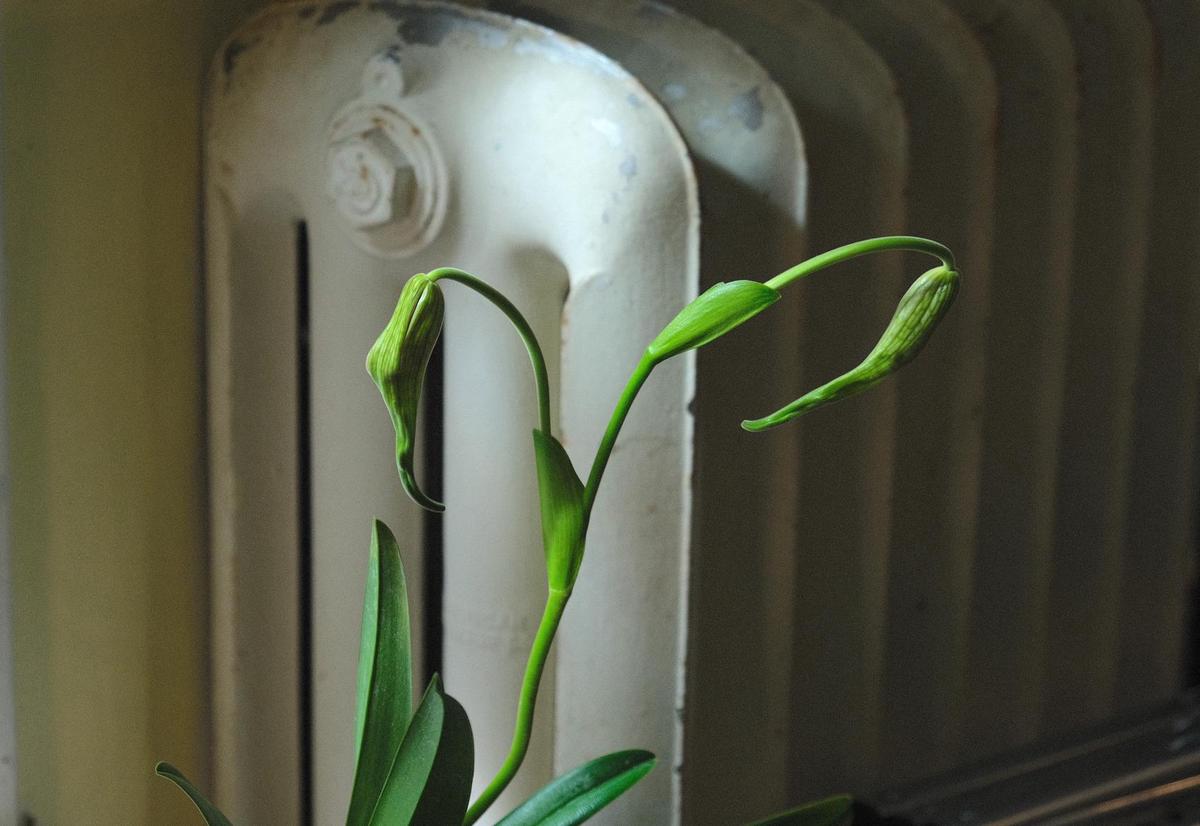
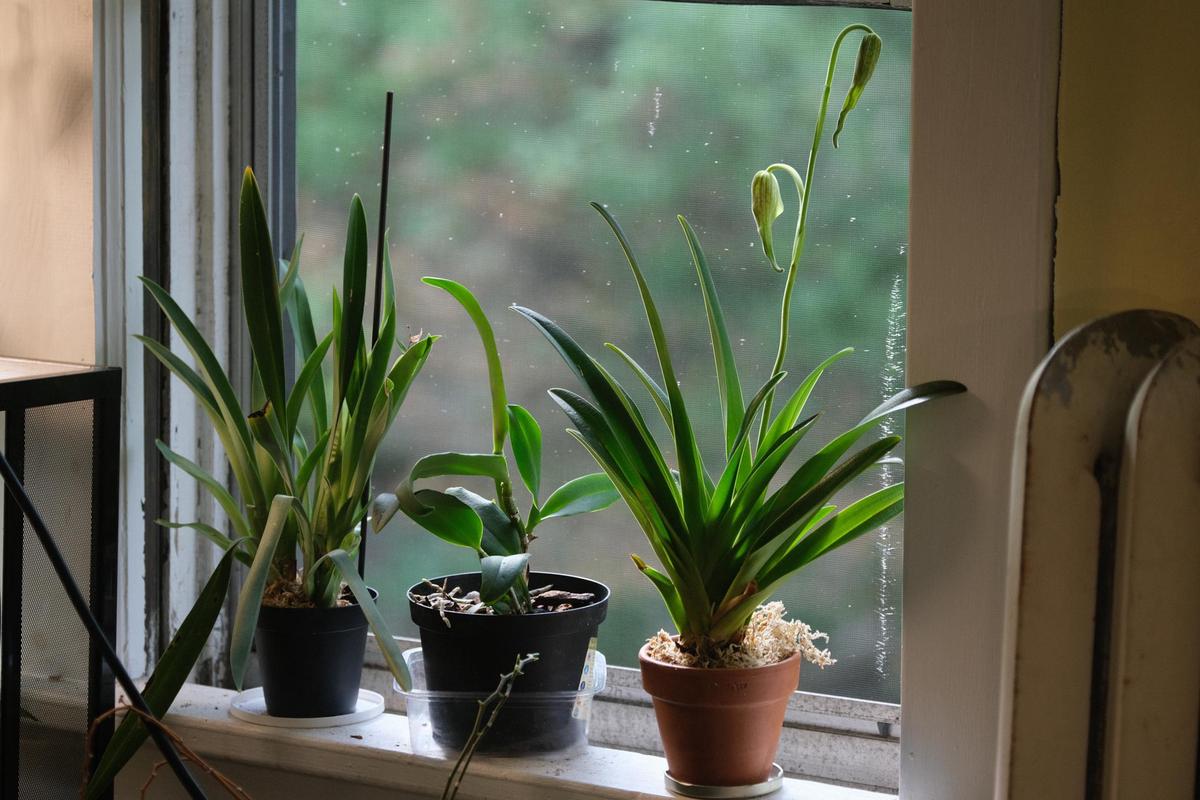
Phragmipedium 'Zapatilla de la Virgen,' a primary hybrid between Phrag. caudatum (syn. wallisii/warszewiczianum) and Phrag. humboldtii. Humboldtii has a more desirable appearance, with the mauve tinge on the lip, but caudatum is more heat-tolerant.
September 9
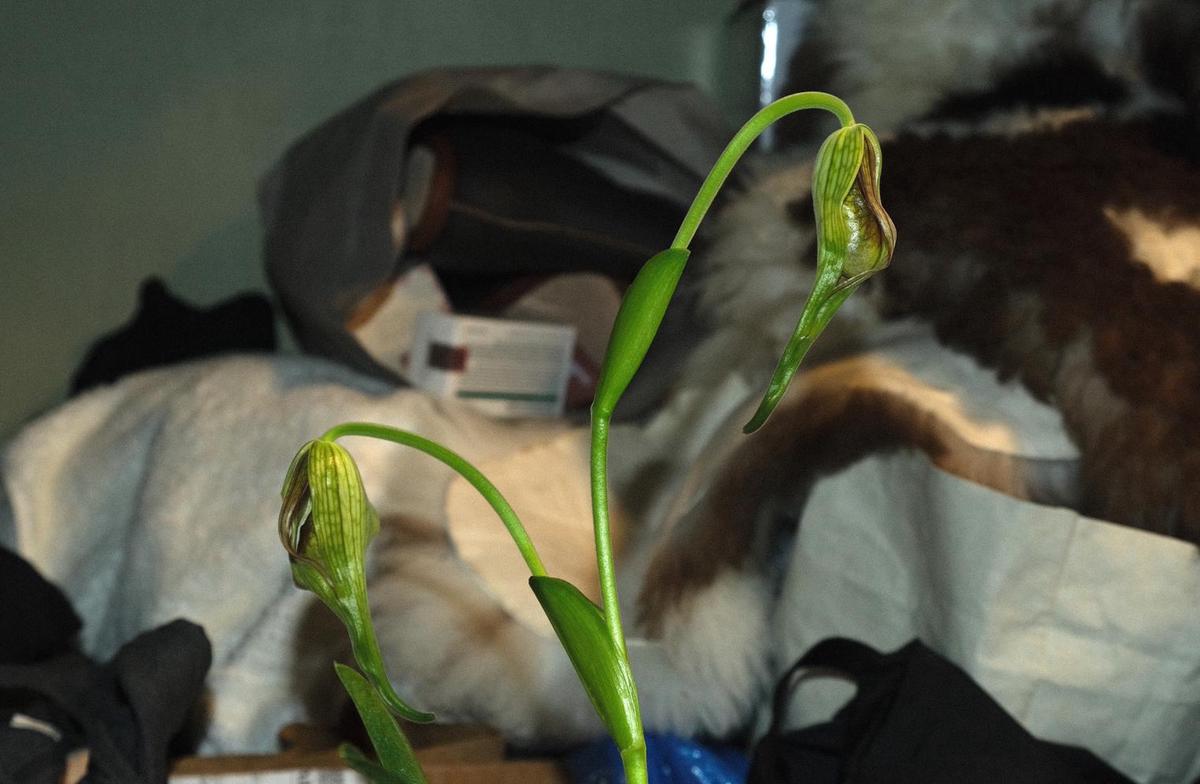
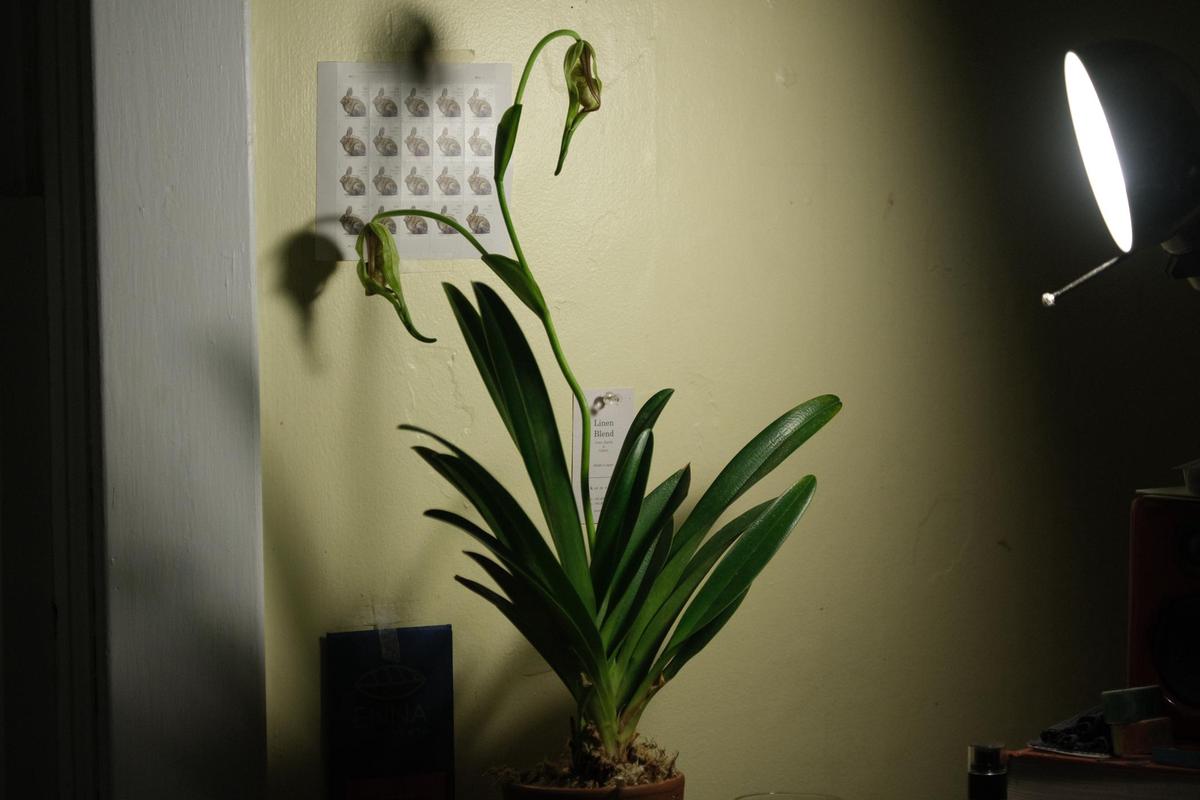
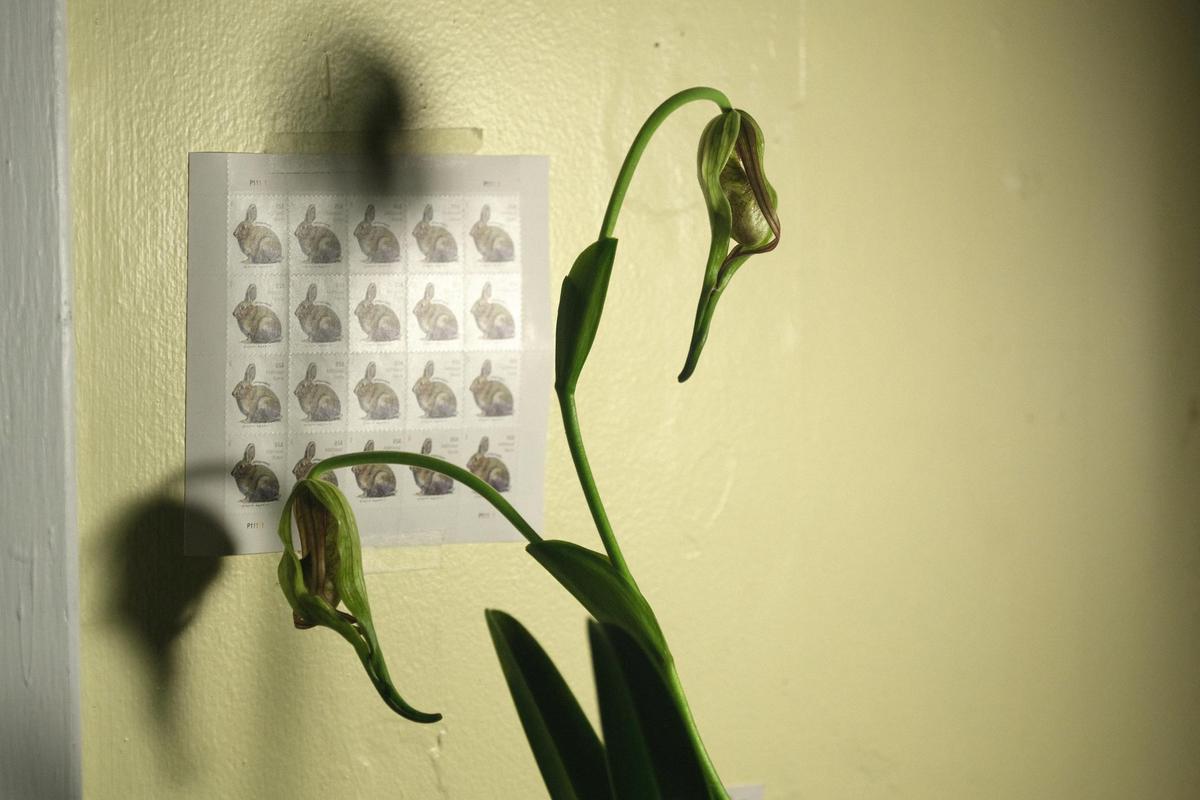
The opening process is unexpectedly slow, after the quick opening of the sheath.
September 10
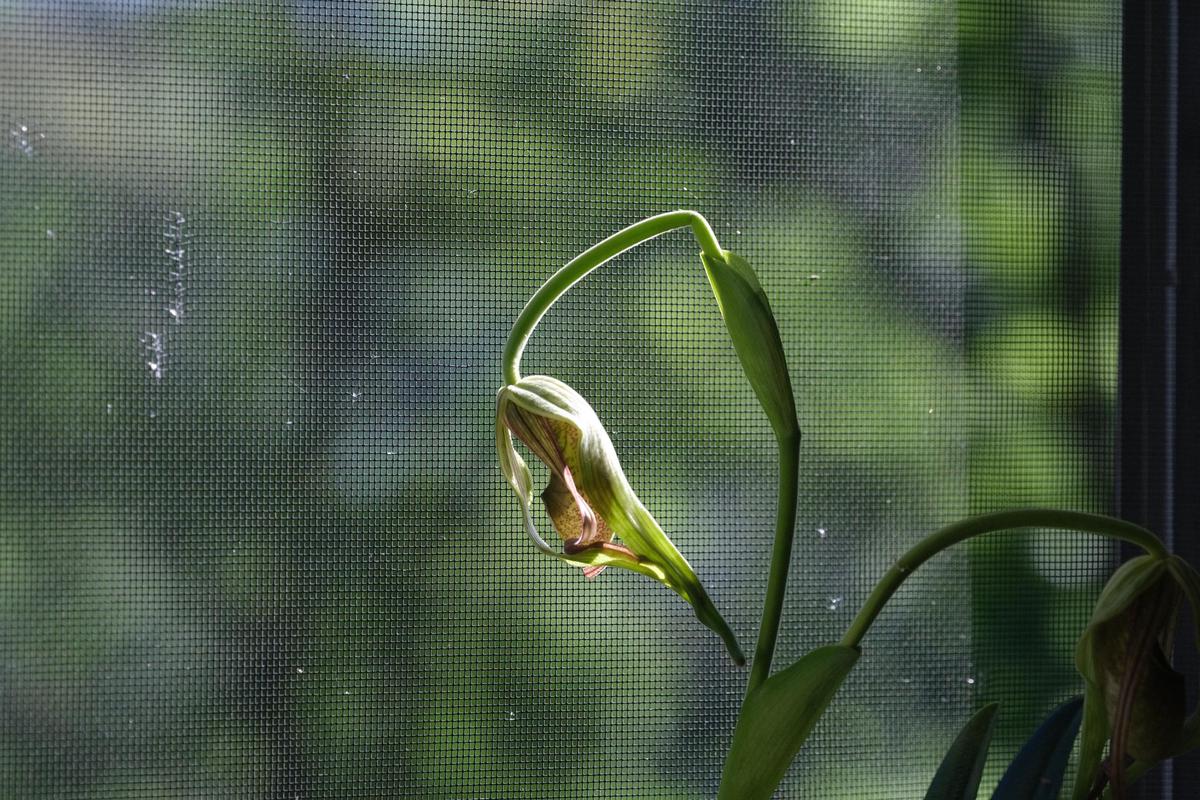
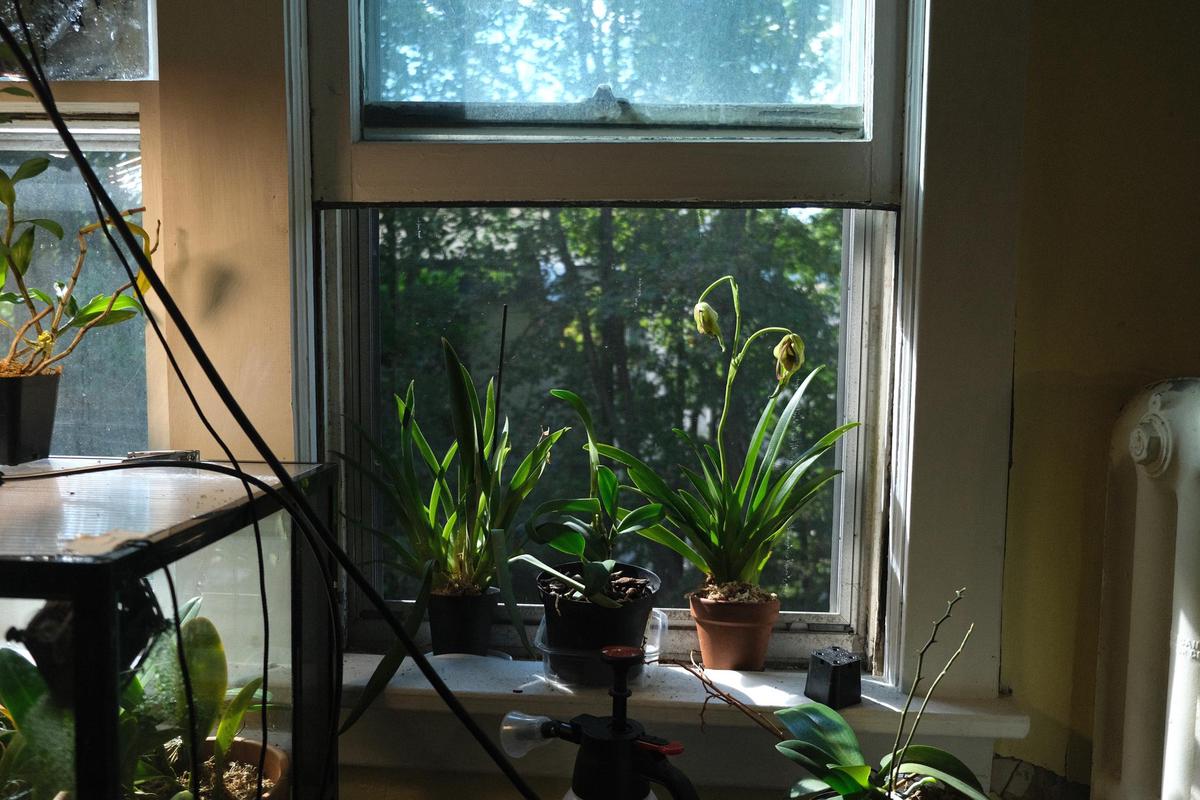
Last night, it tipped over and fell to the ground, thankfully without damaging the blooms too badly. The whole plant is unstable because many of the roots are not in great condition. I put a splint on the top bud afterwards. There's something striking about the way it broke, anyhow. I feel much more excitement around the incipient bloom than the fully opened flower, though I am curious to see how long the tassel-like petals will get.
September 12
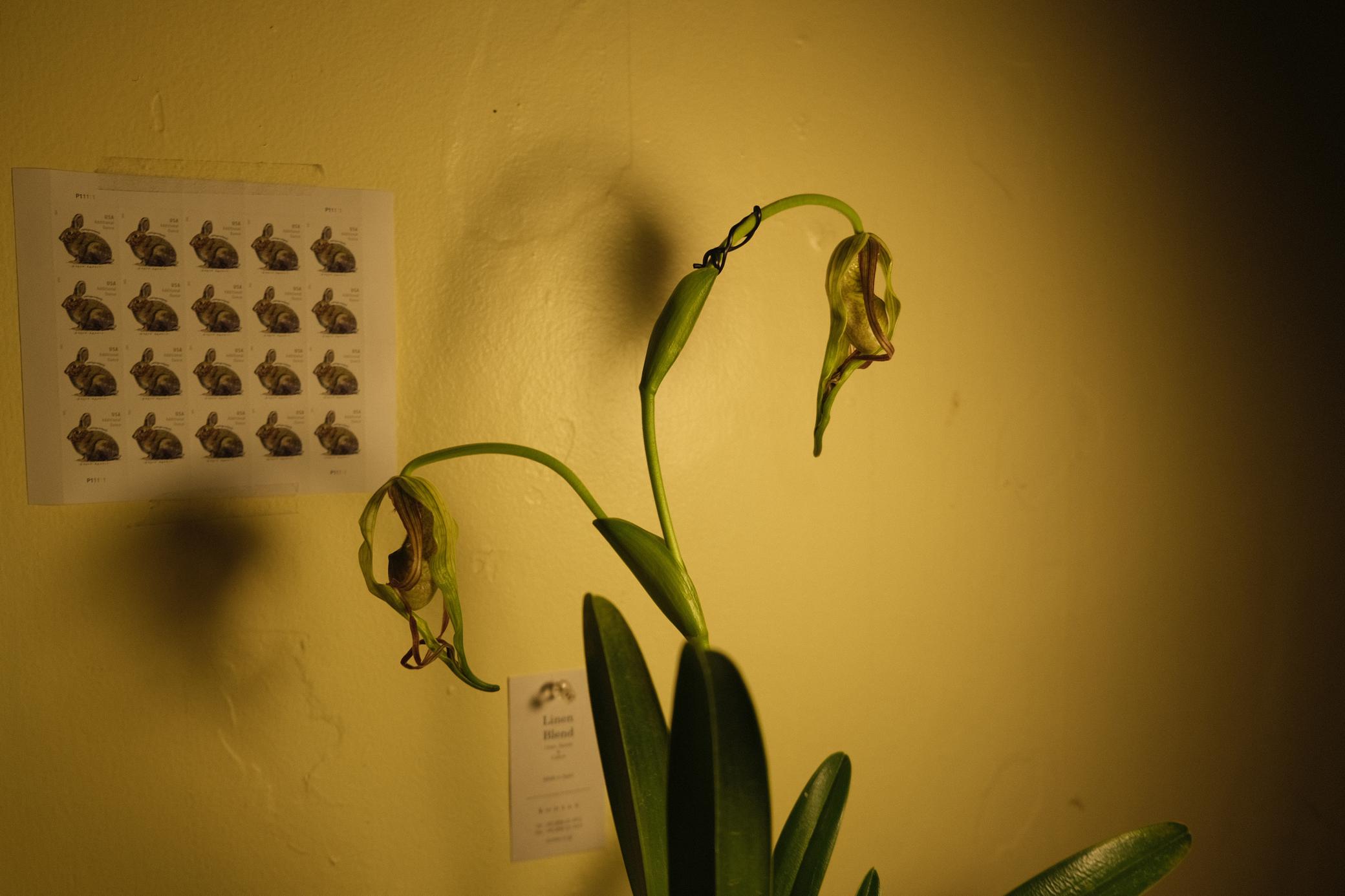
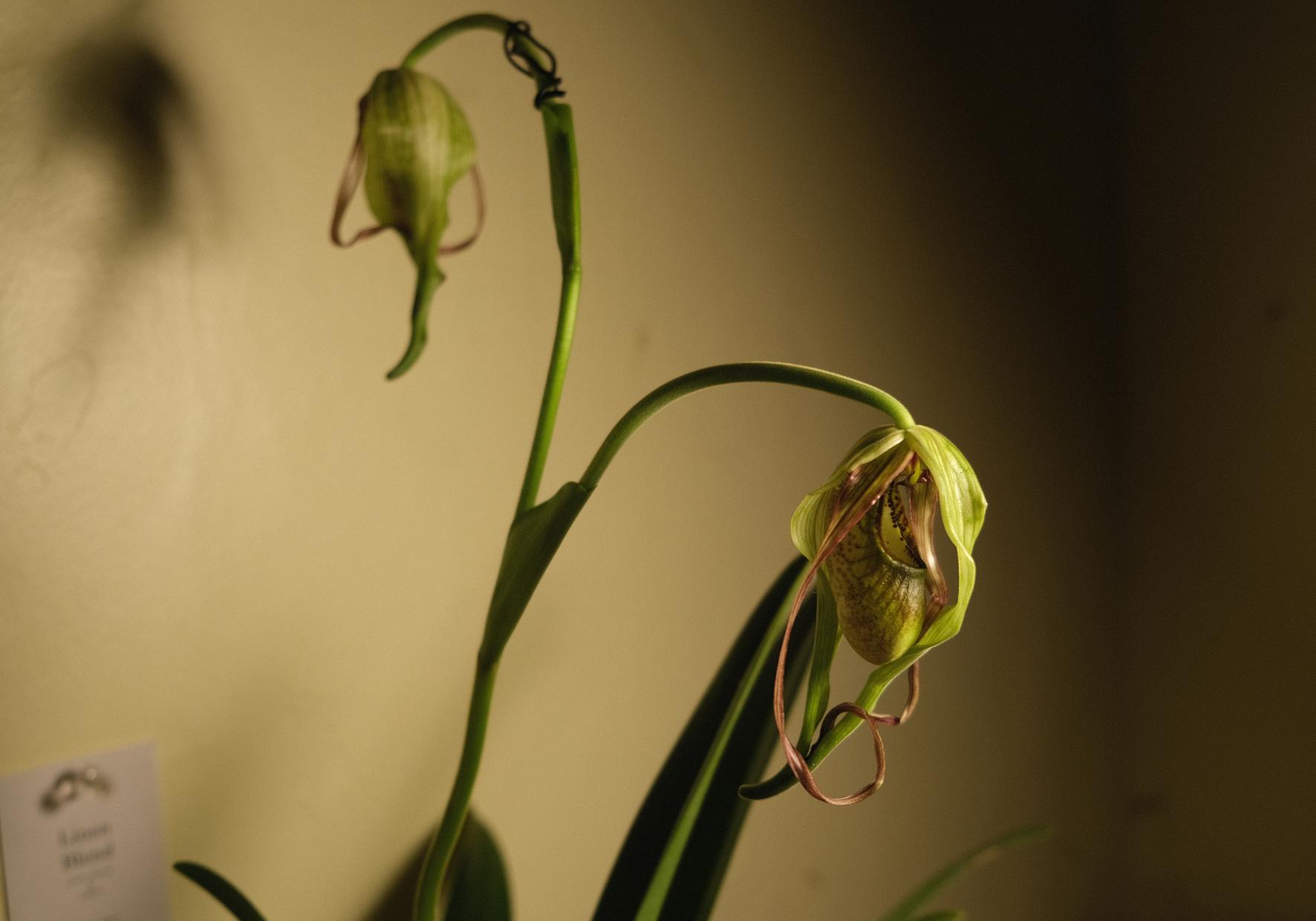
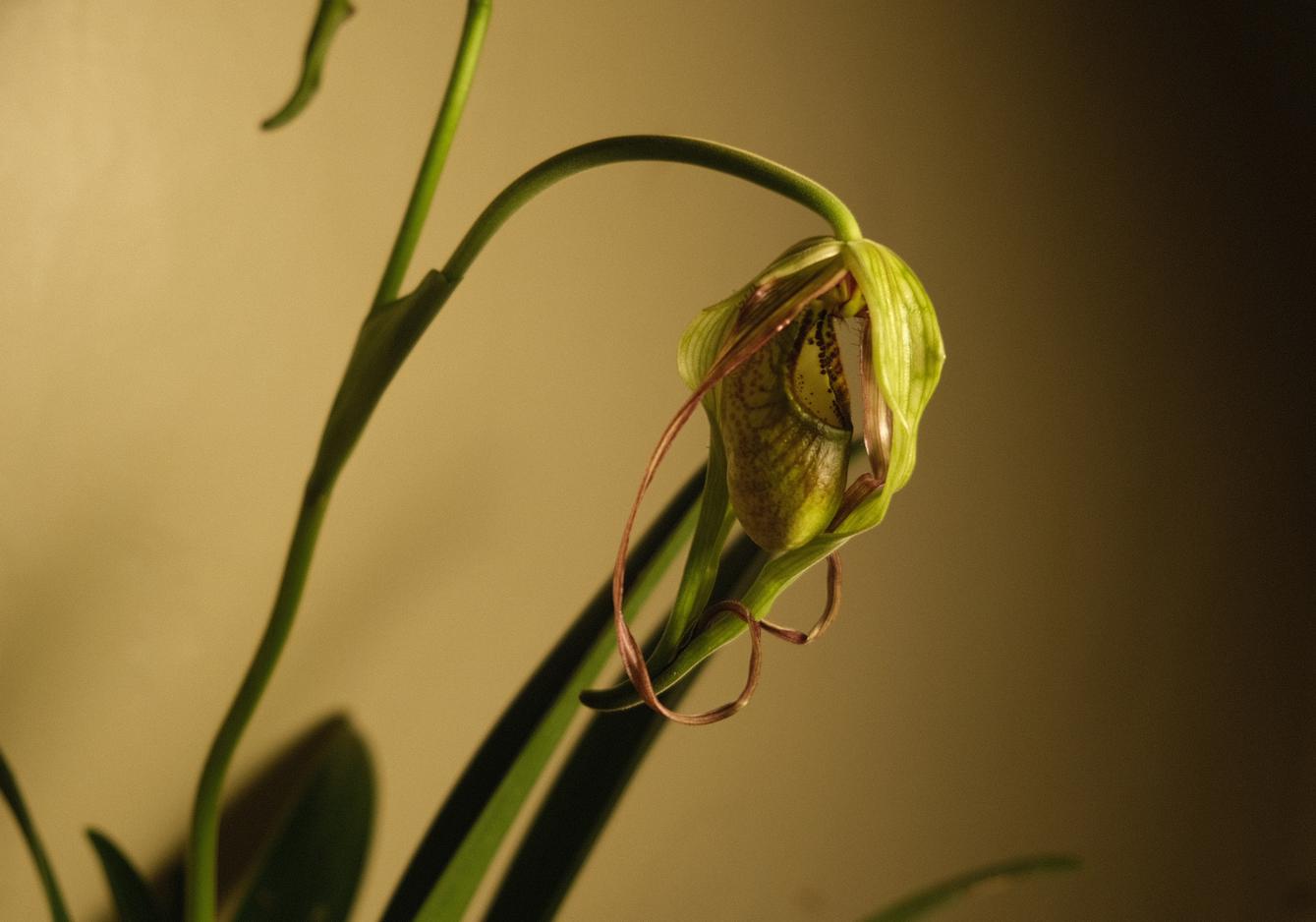
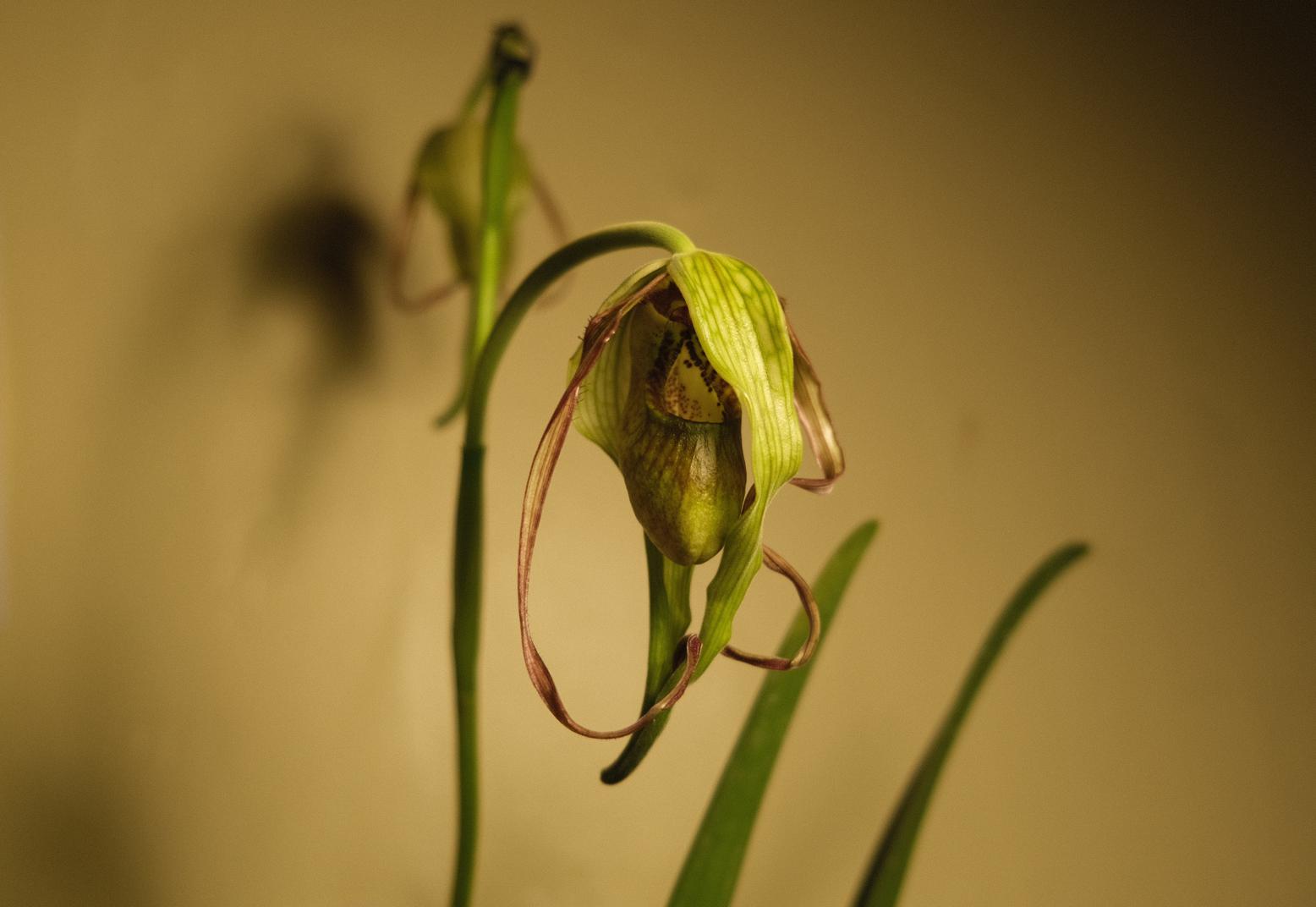
Waiting for the tresses to unfurl...
September 15
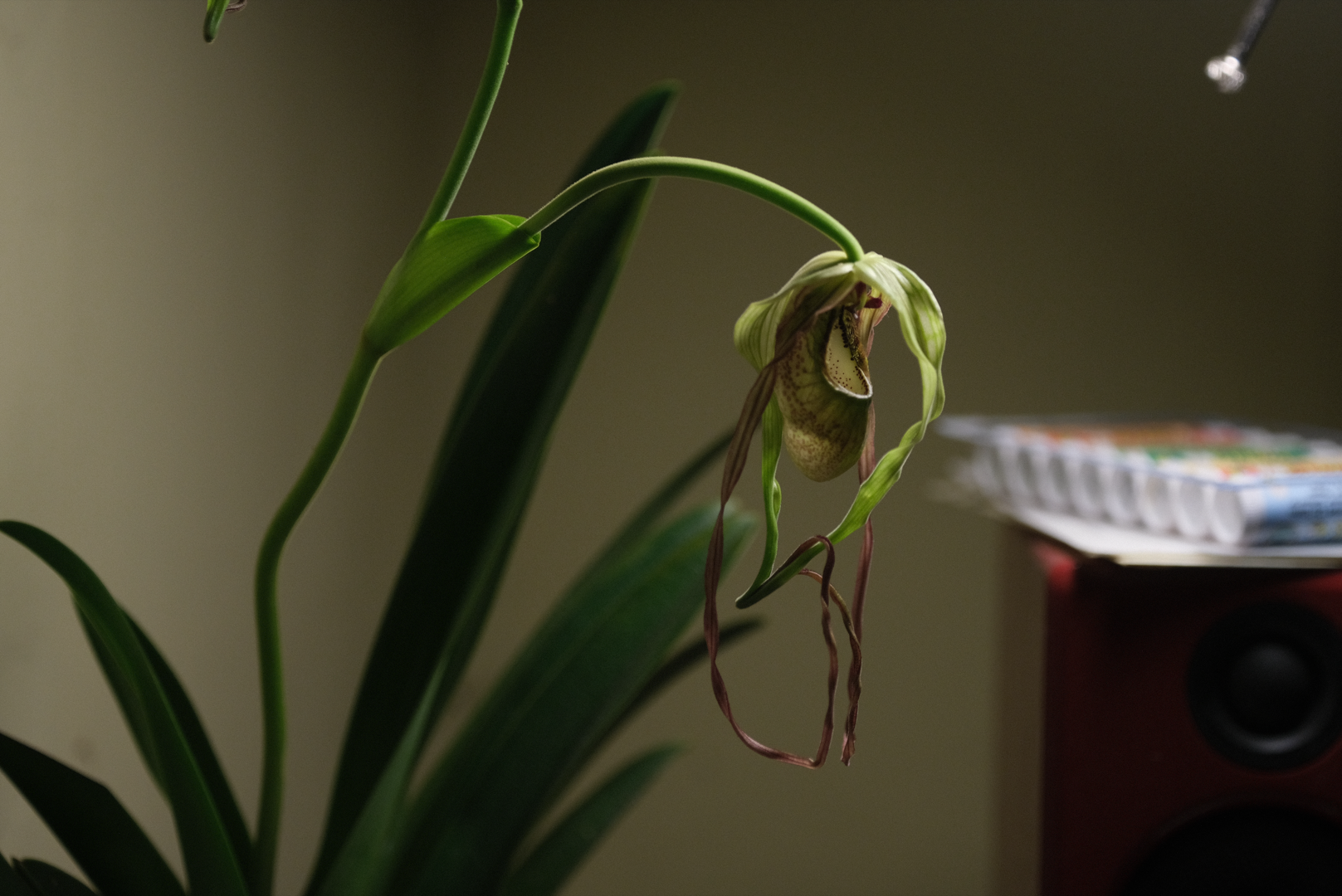
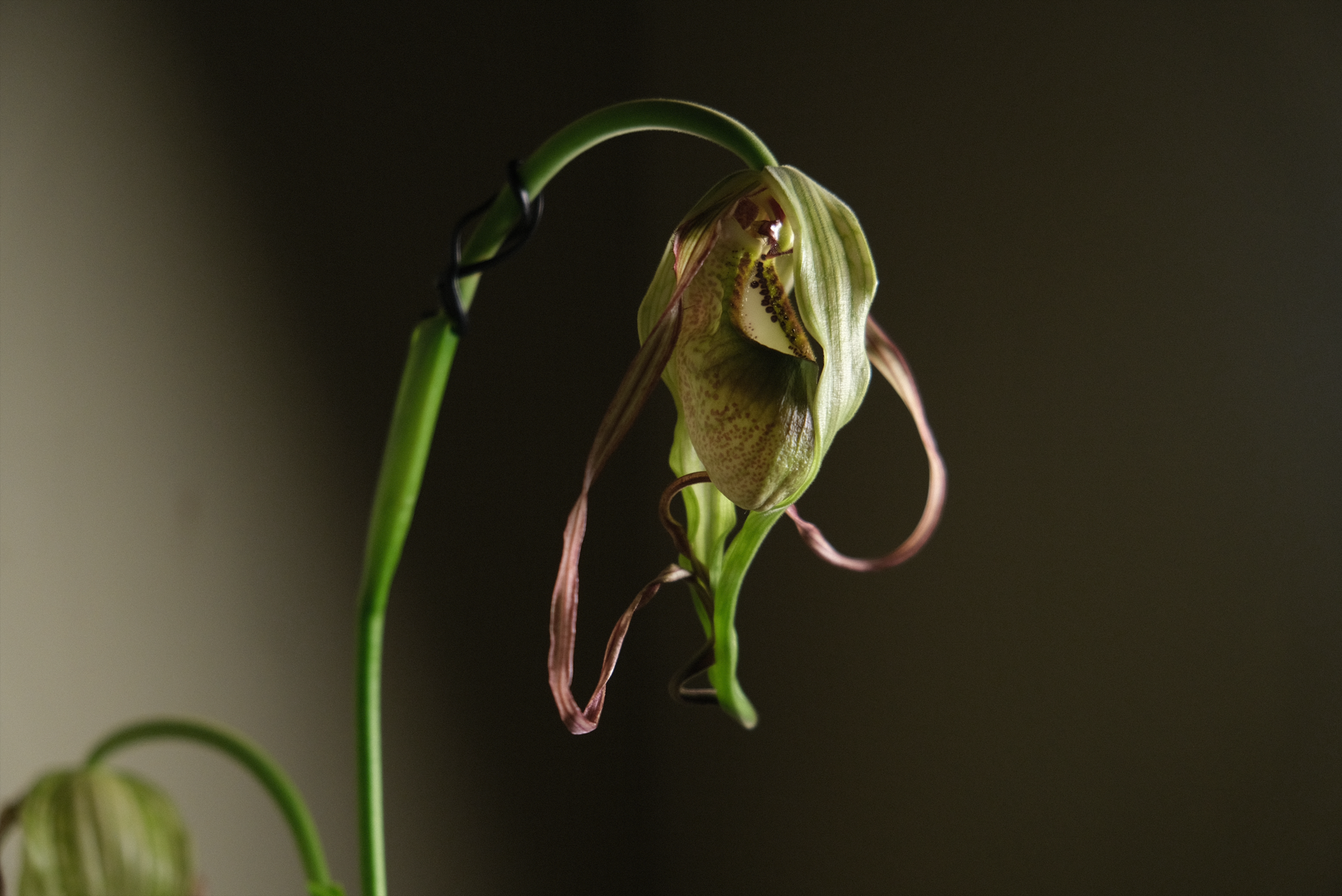
The wire cast is working; this flower should open properly.
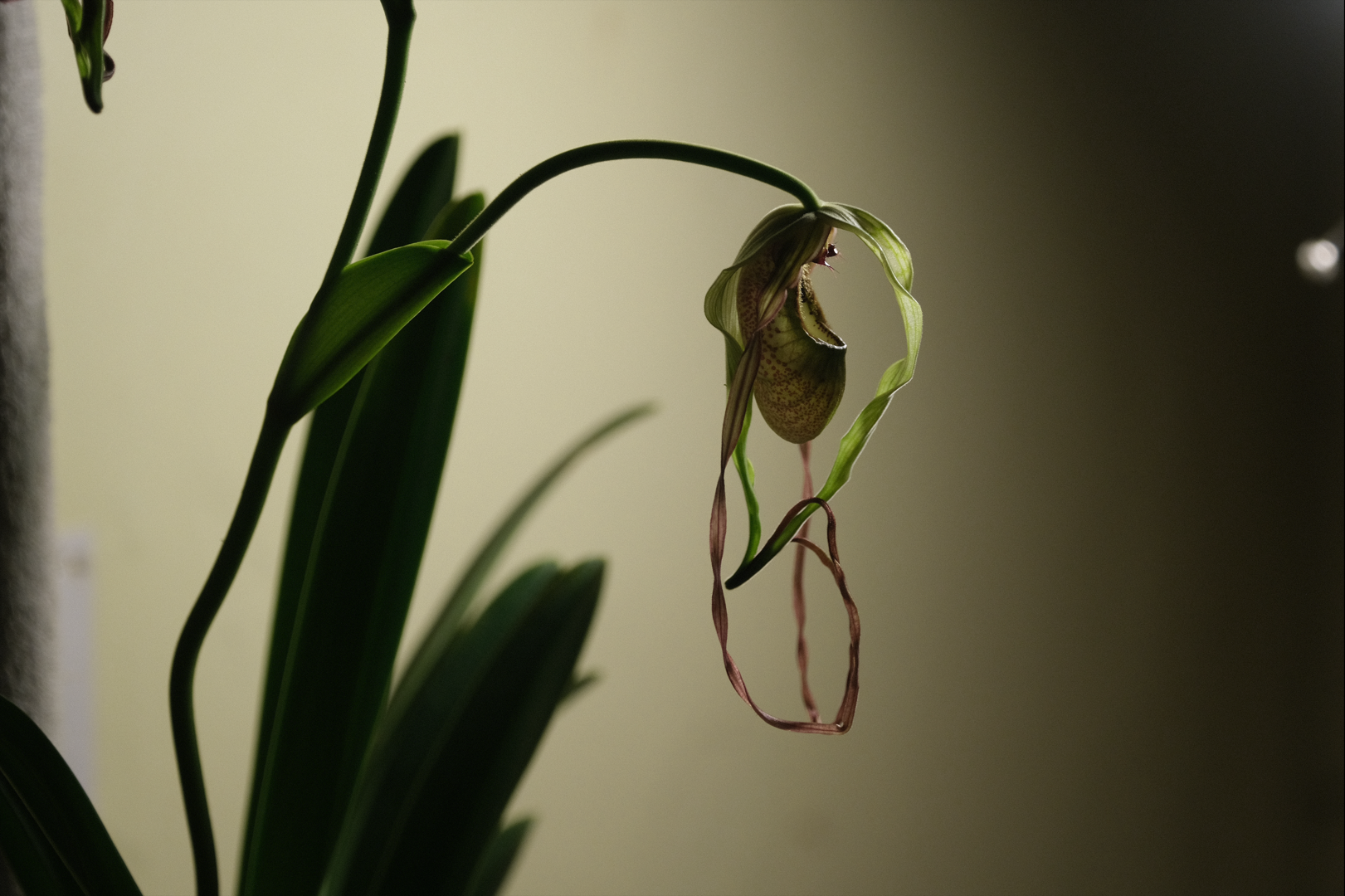
The glistening tips are so delicious.
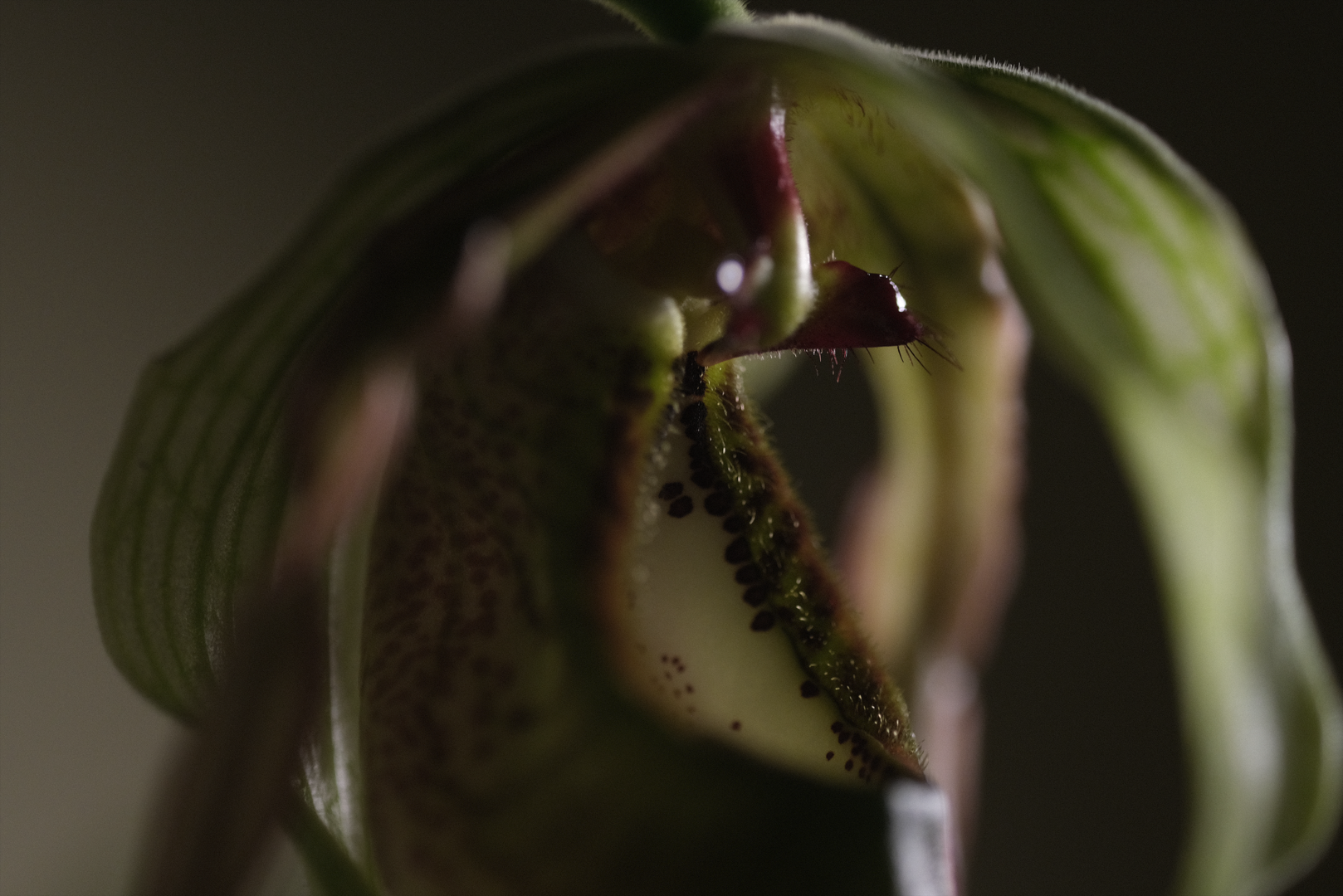
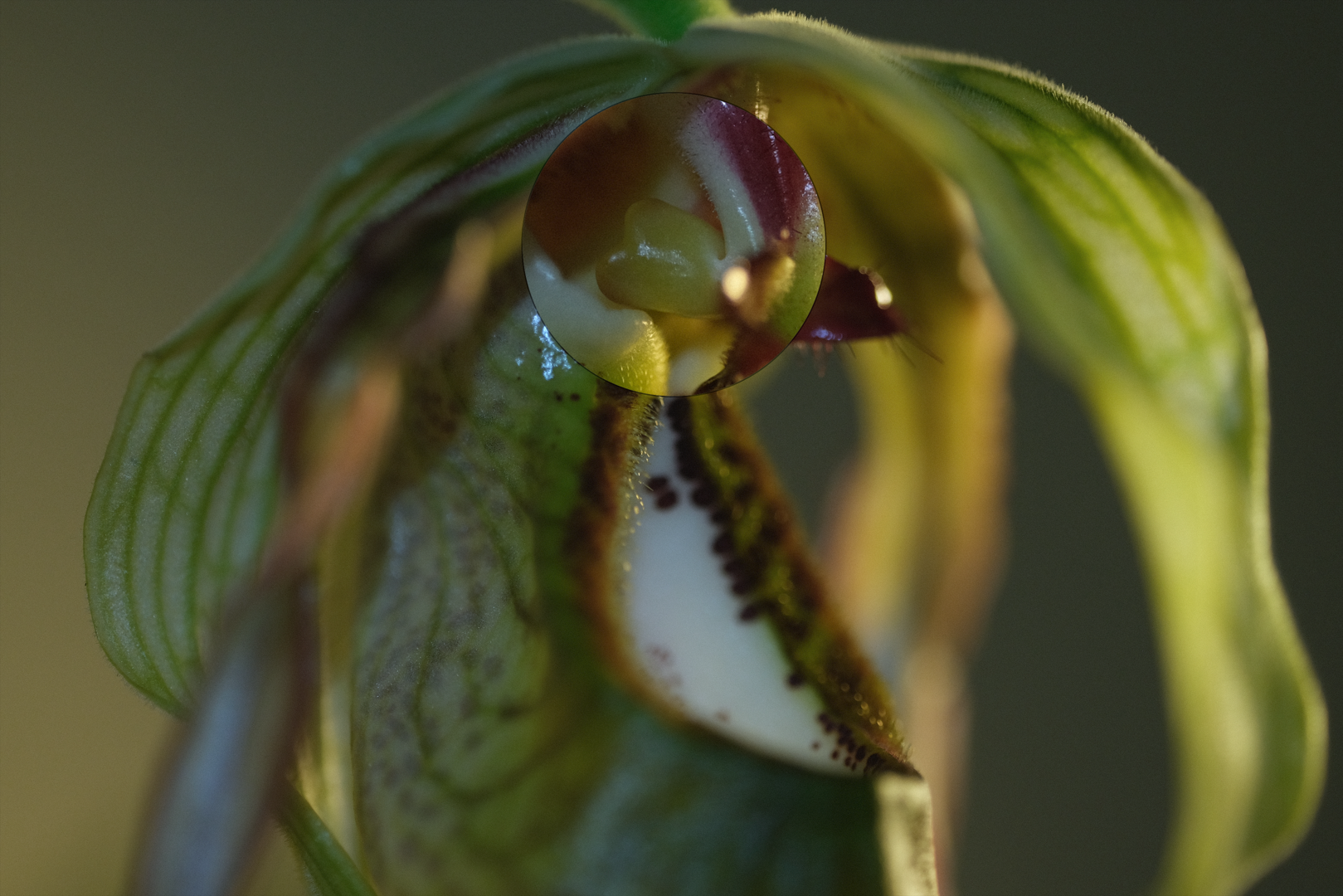
Here, you can see one of the flower's sperm-sacs, its pollinia.
September 18
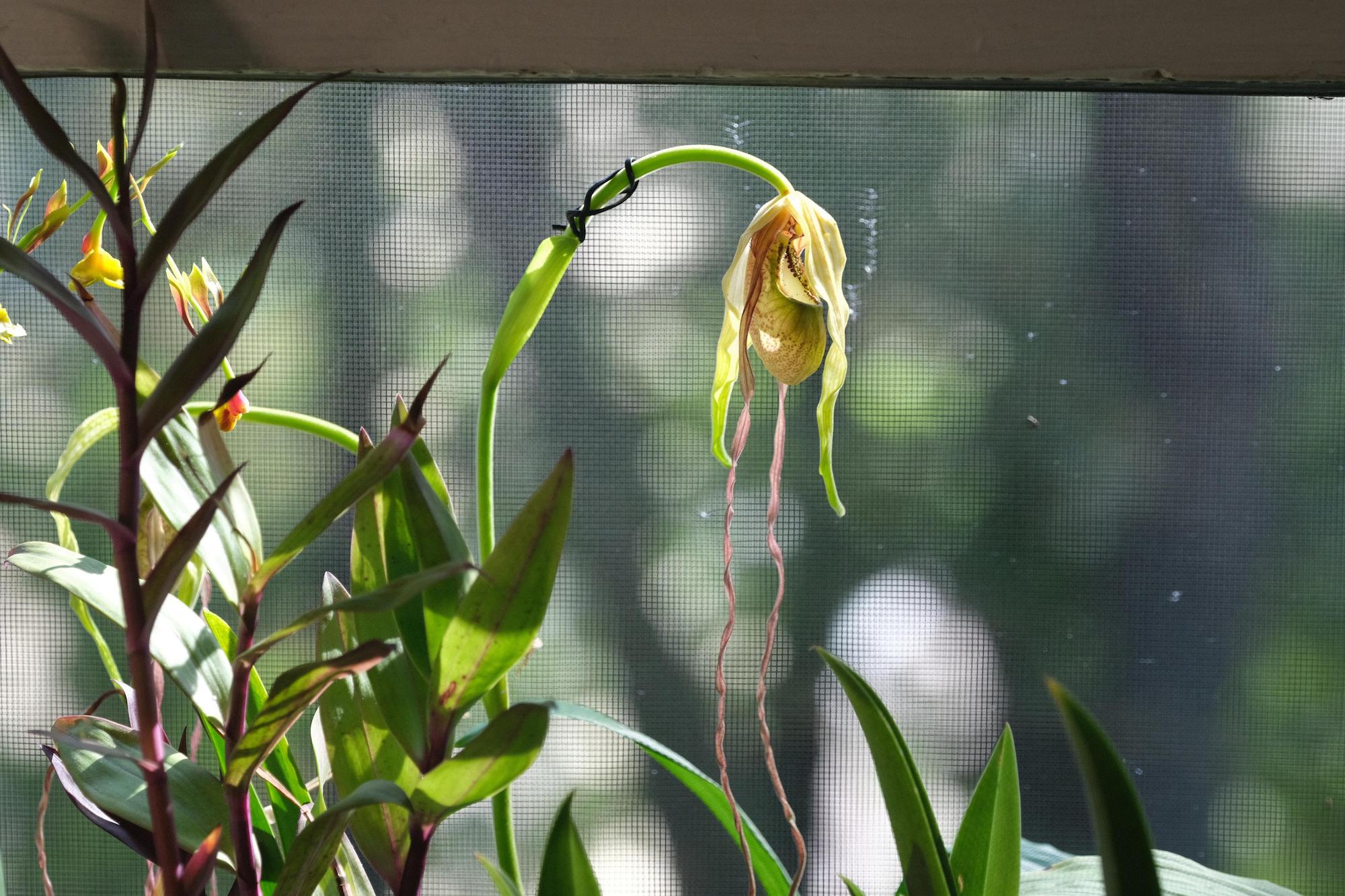
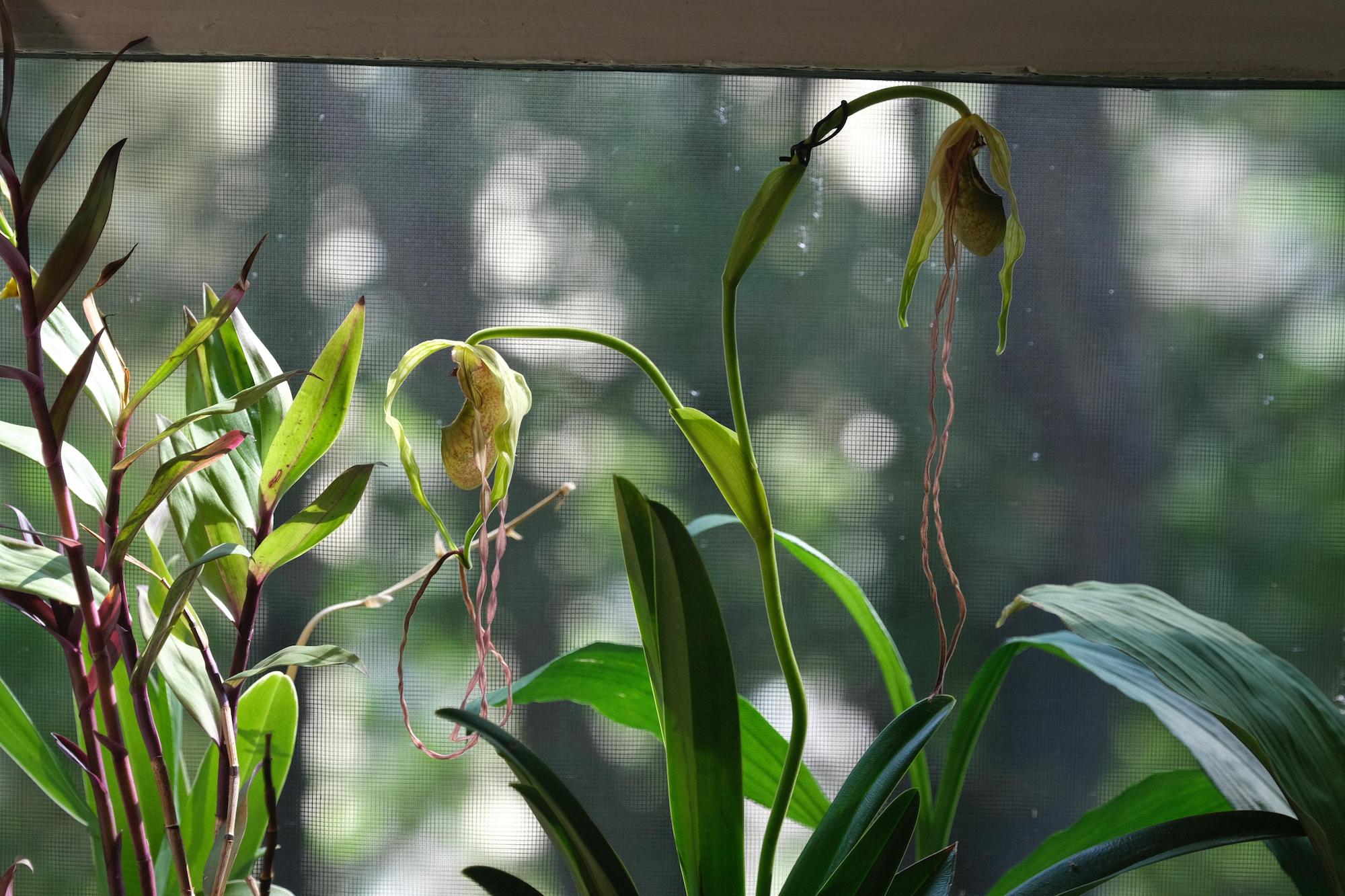
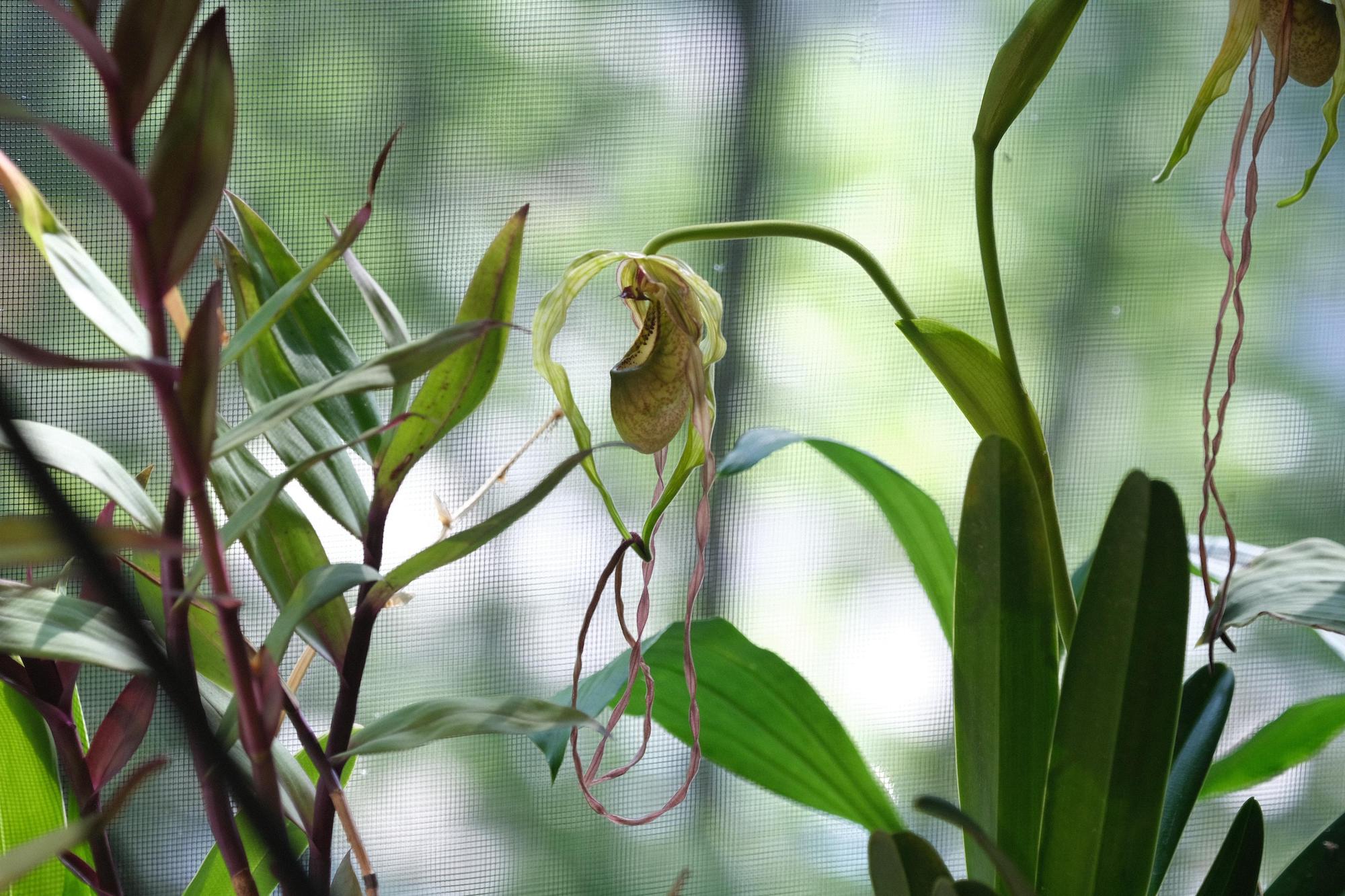
September 20
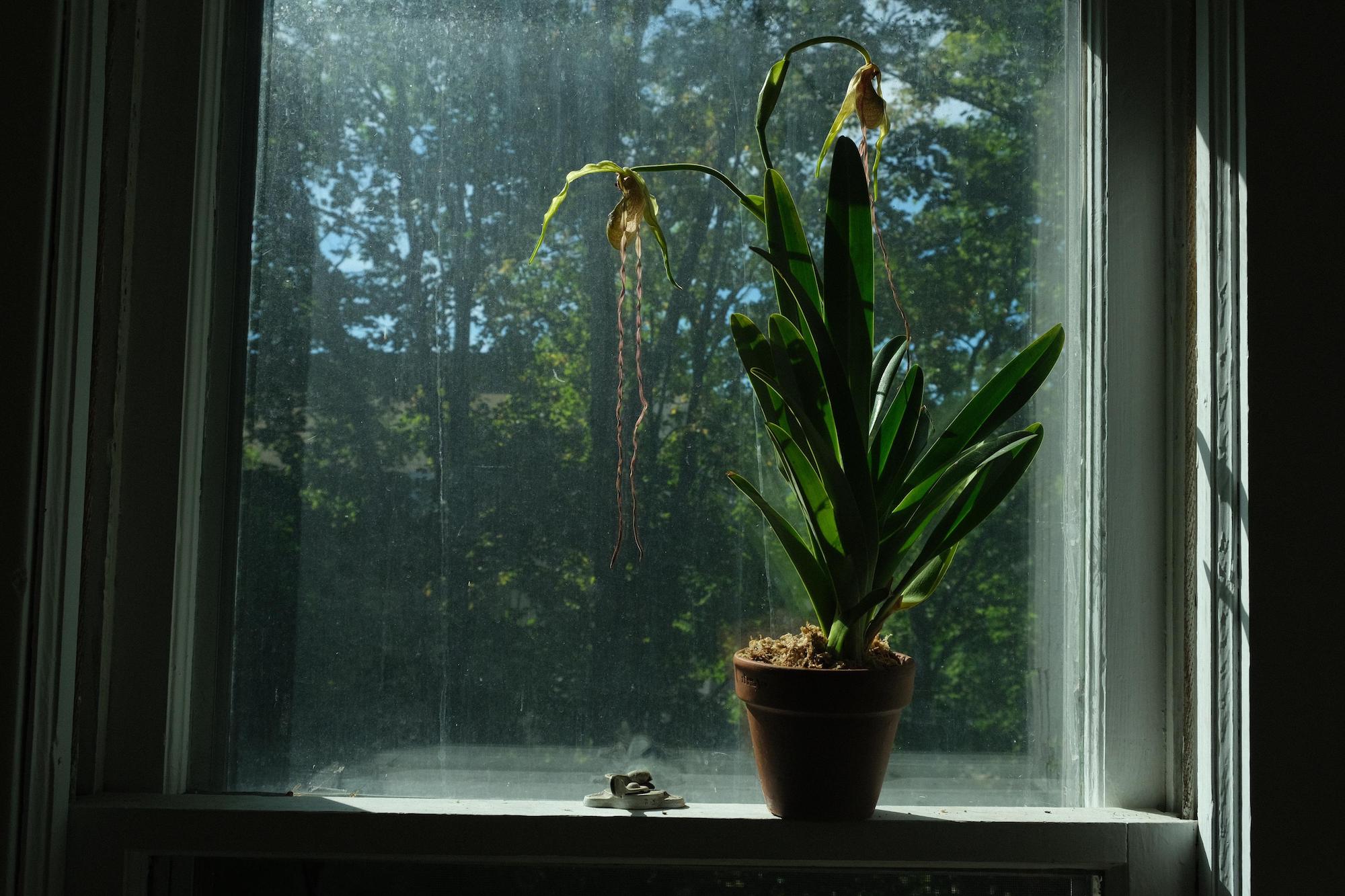
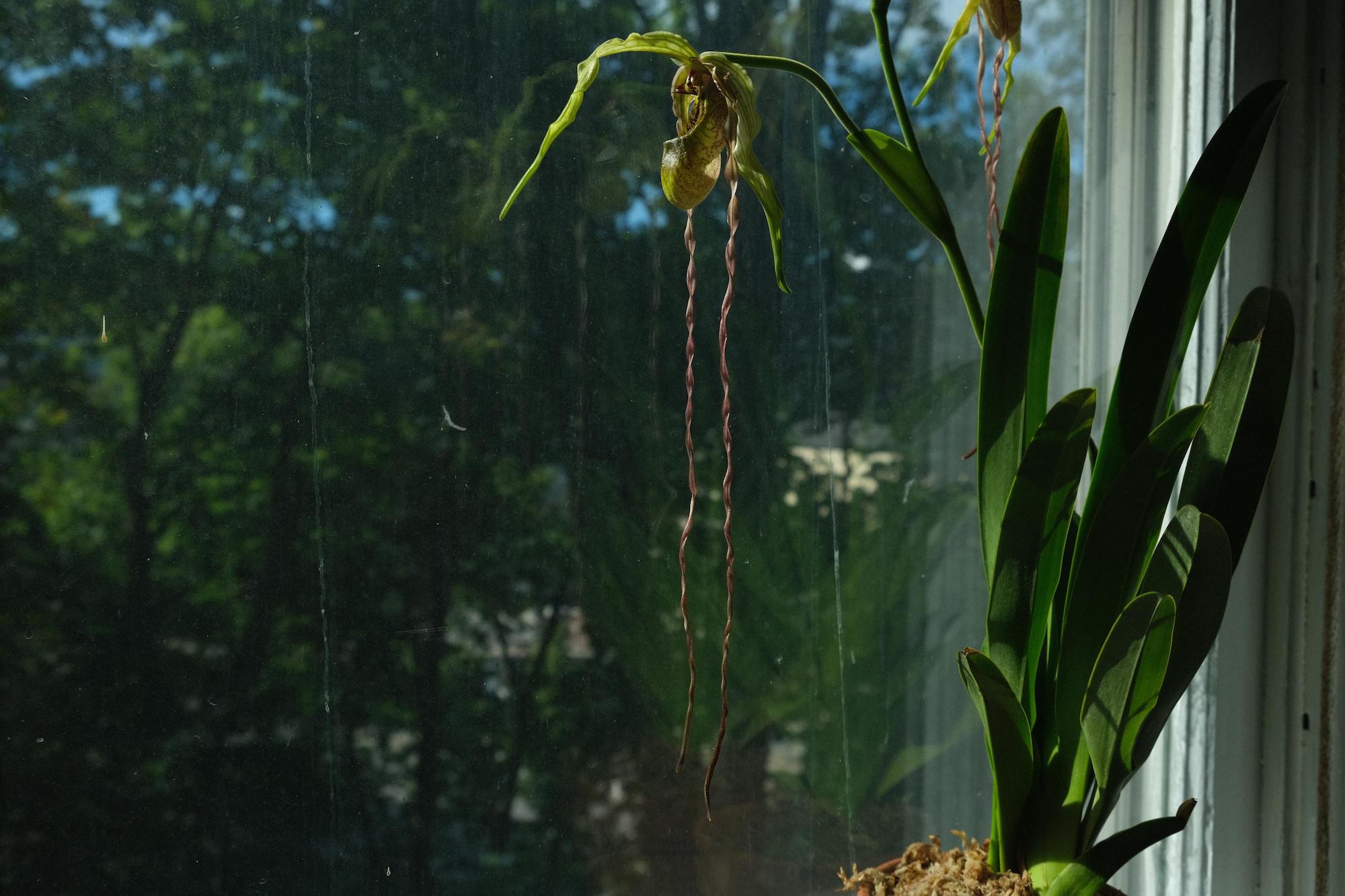
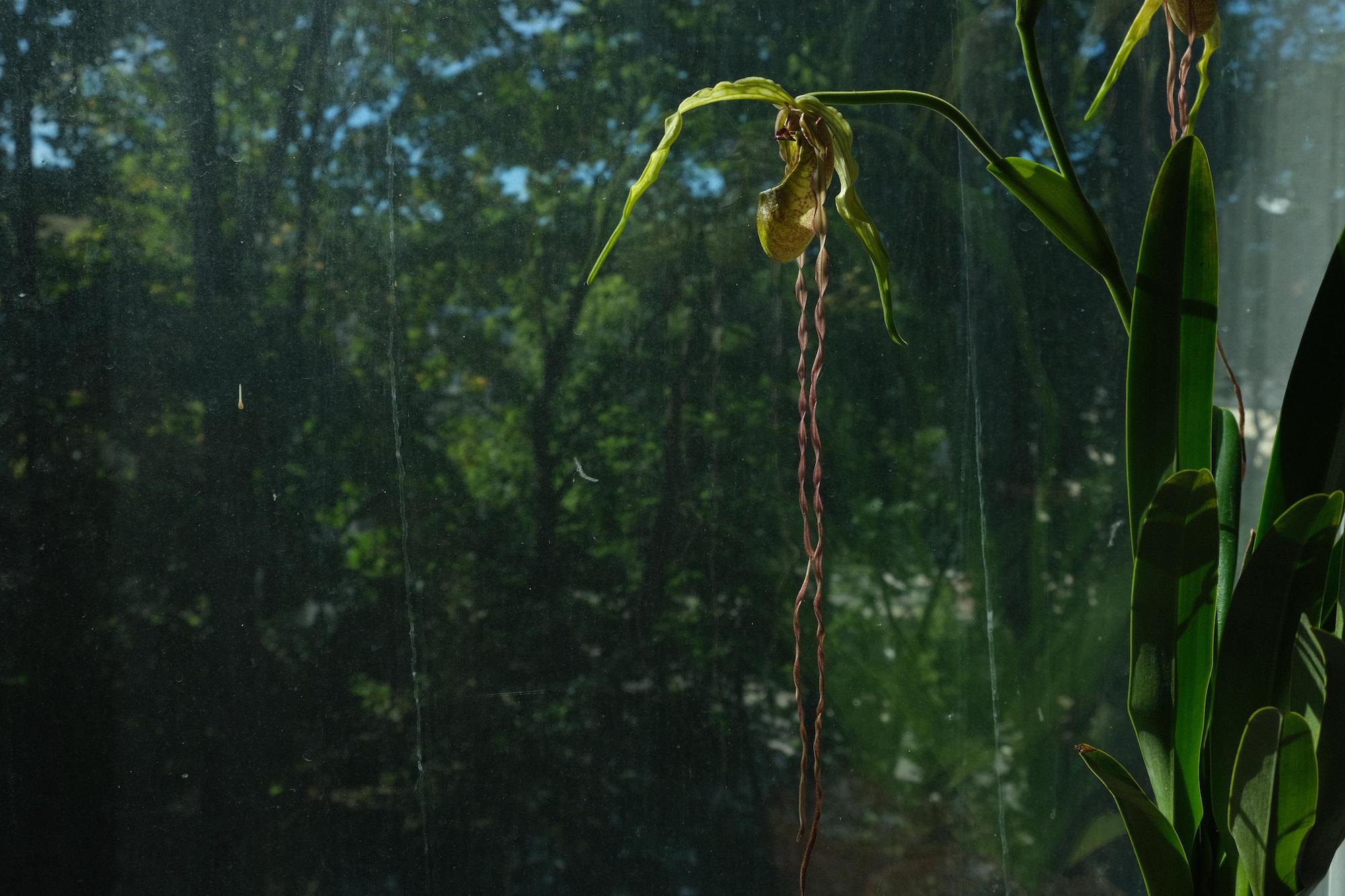
October 3-4
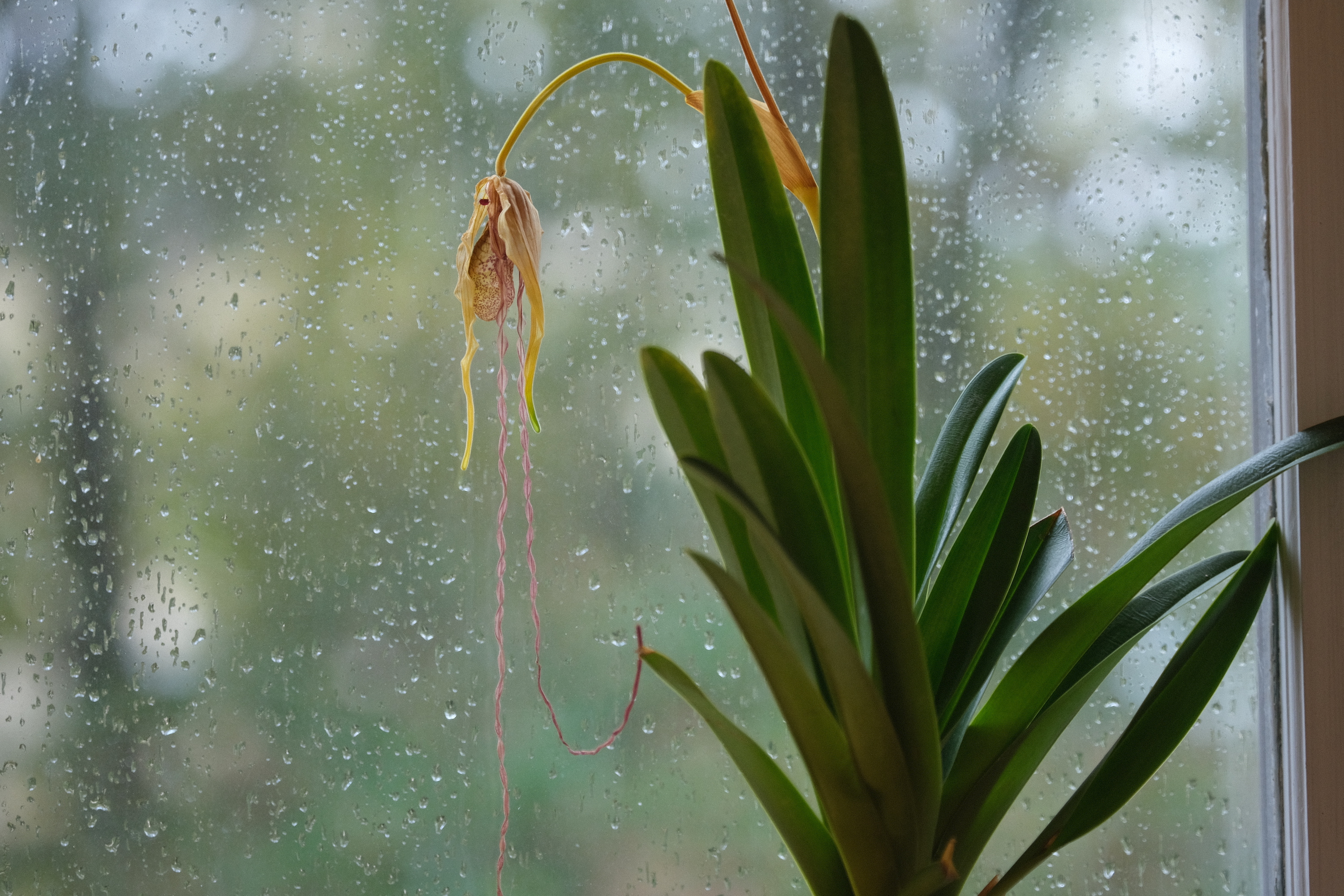
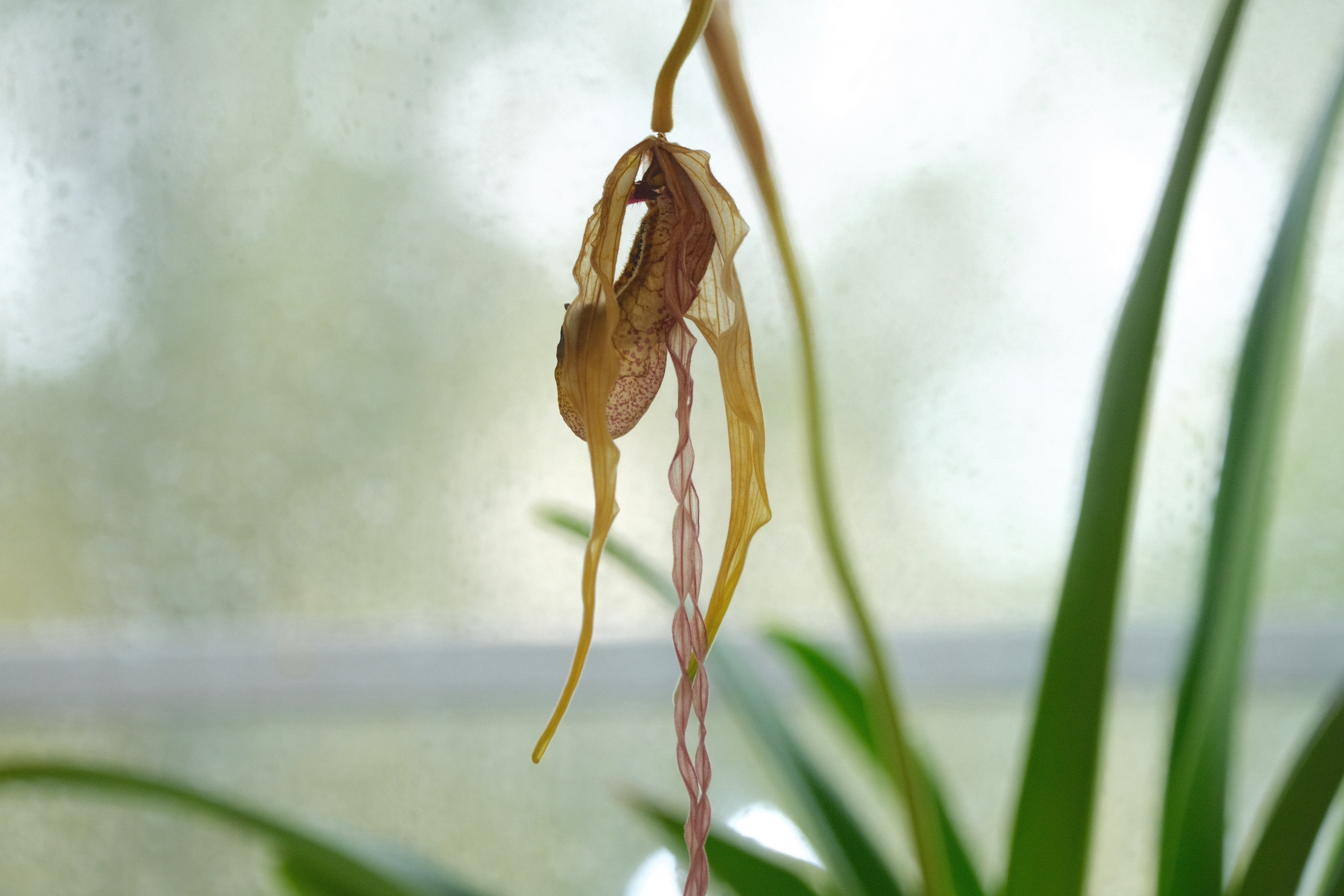
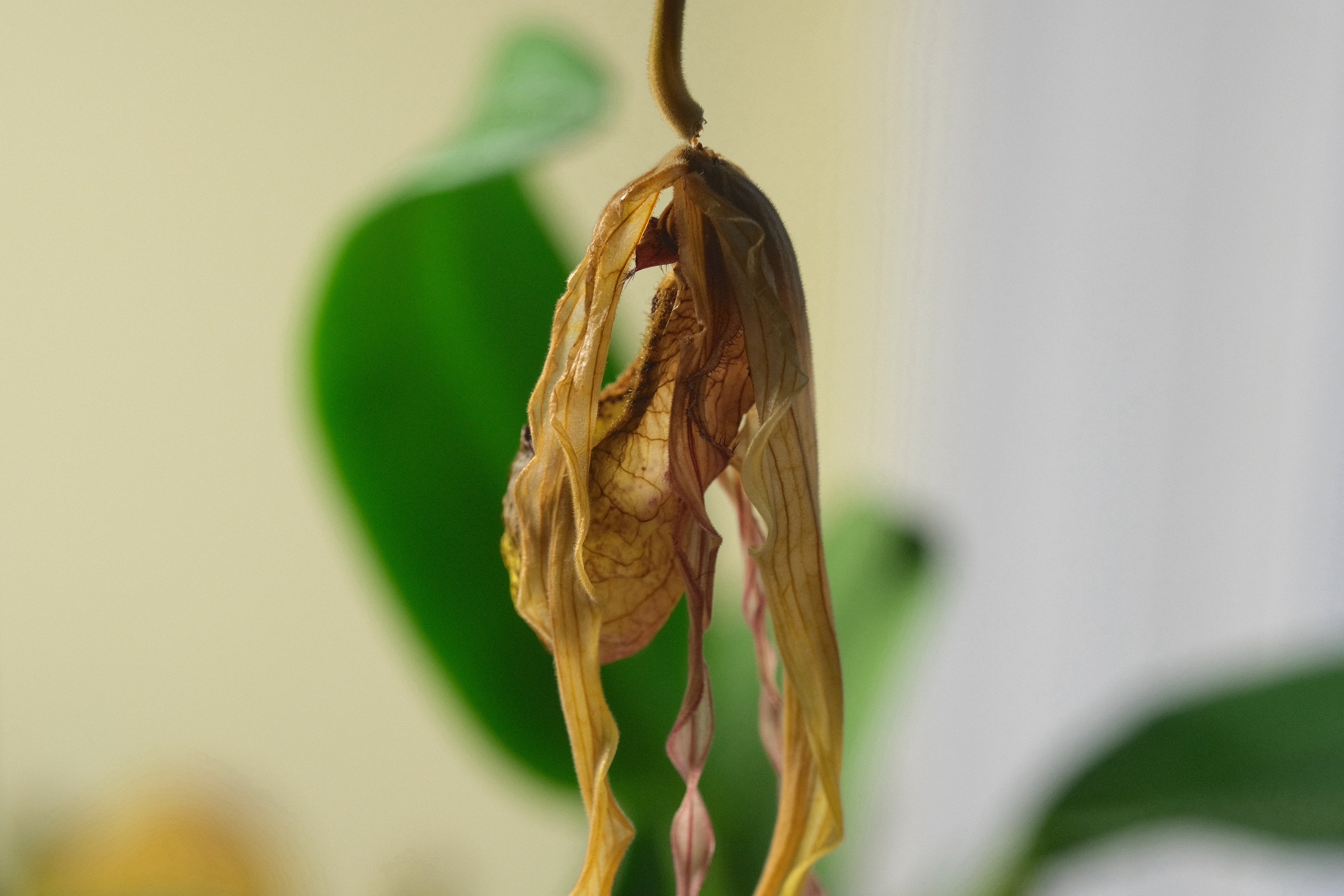
Georges Bataille, "The Language of Flowers":
It is vain to consider, in the appearance of things, only the intelligible signs that allow the various elements to be distinguished from each other. What strikes human eyes determines not only the knowledge of the relations between various objects, but also a given decisive and inexplicable state of mind. Thus the sight of a flower reveals, it is true, the presence of this well-defined part of a plant, but it is impossible to stop at this superficial observation; in fact the sight of this flower provokes in the mind much more significant reactions, because the flower expresses an obscure vegetal resolution. What the configuration and color of the corona reveal, what the dirty traces of pollen or the freshness of the pistil betray doubtless cannot be adequately expressed by language; it is, however, useless to ignore (as is generally done) this inexpressible real presence and to reject as puerile absurdities certain attempts at symbolic interpretation.